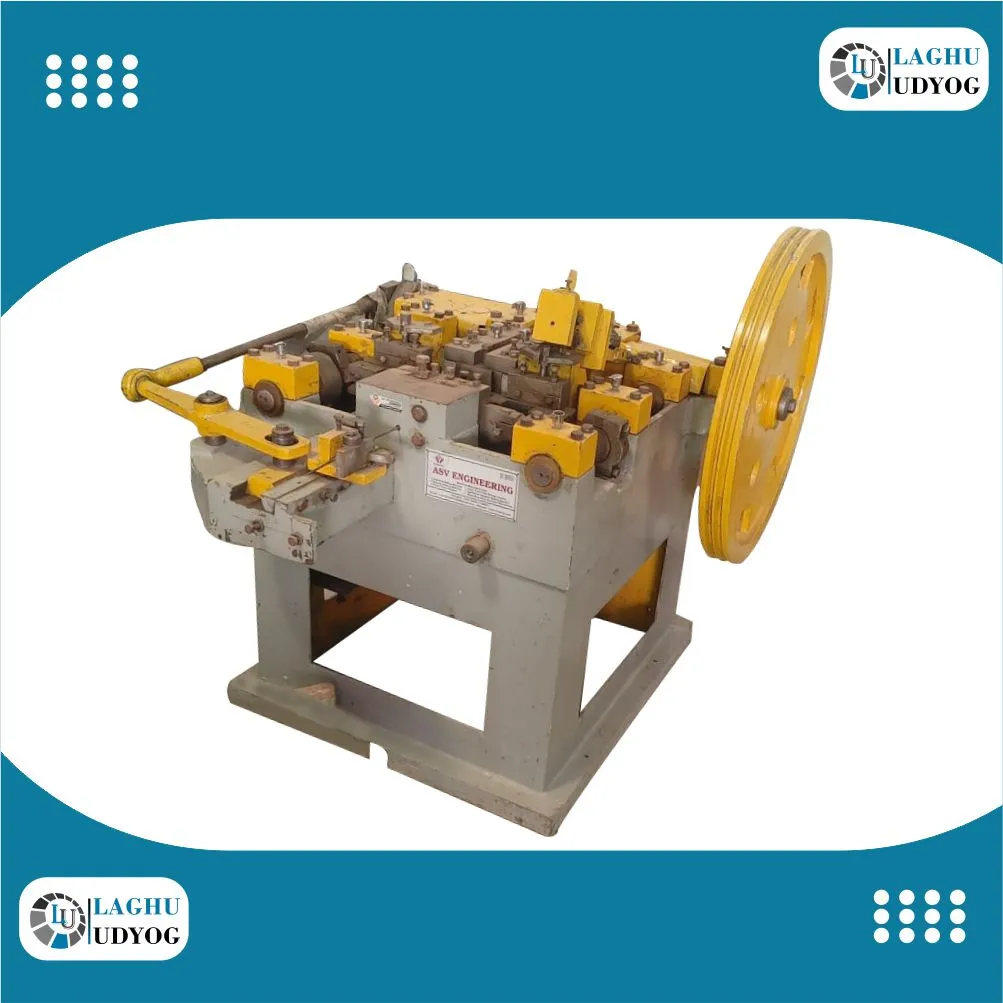
The wire nail making business is one of the most profitable small-scale manufacturing ventures in India. Nails are an essential commodity used in construction, furniture making, packaging, and countless other industries. The demand for nails remains consistent throughout the year, making it a reliable source of income for entrepreneurs who want to start a manufacturing business with moderate investment.
Understanding the Wire Nail Industry
India's construction sector is growing rapidly, with government initiatives like PMAY (Pradhan Mantri Awas Yojana) driving housing demand across rural and urban areas. This growth directly impacts the demand for building materials, including nails. The wire nail manufacturing industry serves not only construction but also carpentry workshops, furniture factories, shipping companies, and agricultural equipment manufacturers. Starting a wire nail making business allows you to tap into this ever-expanding market with relatively low risk and consistent returns on your investment.
Investment Required for Wire Nail Business
The total investment for a wire nail making business depends on the scale of operations and the type of machinery you choose. A basic setup with a semi-automatic wire nail making machine costs between Rs. 1,50,000 to Rs. 3,00,000. This includes the machine, installation, initial raw material stock, and working capital for 2-3 months. For a fully automatic production line, you may need to invest Rs. 5,00,000 to Rs. 10,00,000. The space required for a small-scale unit is approximately 500 to 1000 square feet, which can be a rented shed or a portion of your existing property. Electricity consumption is moderate, typically 3-5 HP motor depending on the machine capacity.
Raw Materials and Their Sourcing
The primary raw material for nail manufacturing is mild steel wire, which is readily available from steel markets and authorized distributors. The wire comes in various diameters from 1.5mm to 6mm, and you should stock sizes based on the most commonly demanded nail sizes in your local market. Binding wire and galvanized wire are also used for producing specialized nails. You can procure raw materials from steel wholesalers in bulk to reduce costs. Maintaining a relationship with multiple suppliers ensures you never face shortages that could halt production. Quality of the wire directly impacts the finished nail quality, so always source from reputable mills.
Machine Selection and Production Capacity
A wire nail making machine operates by feeding wire from a coil, straightening it, cutting it to the desired length, and forming the nail head. Semi-automatic machines require an operator to load wire coils and monitor production, while fully automatic machines handle the entire process with minimal human intervention. Production capacity ranges from 100 kg to 500 kg per day depending on the machine model and nail size. CNC-based machines offer the advantage of producing multiple nail sizes with quick changeover. Choose a machine that matches your target production volume and budget.
Setting Up Your Production Unit
The setup process begins with securing a suitable location with adequate electricity supply and transportation access for raw material delivery and finished goods dispatch. You need to obtain necessary licenses including Udyam registration (MSME), GST registration, trade license from local municipal authority, and pollution clearance if required. Install the machine as per the manufacturer's guidelines and arrange for proper ventilation and safety measures. Hire 2-3 workers initially who can operate the machine, handle raw material loading, and manage packaging. Set up a quality control process to inspect finished nails for uniformity, sharpness, and strength before dispatch.
Marketing and Sales Strategy
Wire nails are sold through multiple channels. You can supply directly to hardware stores, construction material dealers, and carpentry workshops in your locality. Building relationships with hardware shop owners is crucial as they become your regular customers. Participating in local trade exhibitions and joining online B2B platforms like IndiaMART, TradeIndia, and Justdial can help you reach a wider customer base. Offering competitive pricing, consistent quality, and timely delivery will help you establish a strong market presence. Many nail manufacturers also supply to government contractors and infrastructure projects, which provide bulk orders.
Profit Calculation and Financial Planning
A typical semi-automatic wire nail making machine produces approximately 200-300 kg of nails per day. The cost of mild steel wire is around Rs. 55-70 per kg depending on the grade and market conditions. The finished nails sell at Rs. 80-120 per kg in the retail market, though wholesale prices are lower. After accounting for raw material cost, electricity charges (approximately Rs. 2,000-4,000 per month), labor wages, machine maintenance, and packaging expenses, the net profit margin typically ranges from 20% to 35%. With consistent production and sales, a small-scale unit can recover its initial investment within 6-8 months of operation.
Quality Standards and Compliance
Manufacturing nails that meet Indian Standard specifications helps in securing larger contracts and building brand reputation. The Bureau of Indian Standards has specifications for common nails under IS 1648. Maintaining quality control throughout the production process ensures that your nails have the correct dimensions, proper head formation, sharp point, and adequate tensile strength. Regular testing of samples and maintaining production records helps in tracking quality trends and addressing issues promptly. Certifications and quality documentation give you an edge over competitors when dealing with institutional buyers.
Growth Opportunities and Expansion
Once your wire nail making business is established and generating steady profits, you can explore expansion opportunities. Adding different nail varieties such as galvanized nails, concrete nails, roofing nails, and special-purpose nails can diversify your product range. Investing in additional machines increases your production capacity to meet growing demand. You can also consider setting up a distribution network across multiple cities. Some entrepreneurs expand into related products like wire mesh, chain link fencing, or other wire-based products to maximize the utilization of their raw material procurement and distribution infrastructure.
Frequently Asked Questions
The cost of a wire nail making machine in India ranges from Rs. 1,50,000 to Rs. 5,00,000 depending on the capacity and automation level. Semi-automatic machines are more affordable while fully automatic CNC machines cost higher but offer greater production output.
The primary raw materials for wire nail manufacturing include mild steel wire, binding wire, and galvanized wire. You will also need lubricating oil for the machine, packaging materials like cardboard boxes and labels, and basic tools for maintenance. The wire diameter typically ranges from 1.5mm to 6mm depending on the nail size you want to produce.
Wire nail making business can yield profit margins of 20-35% depending on production volume and market demand. With a semi-automatic machine producing 200-300 kg per day, you can earn approximately Rs. 30,000 to Rs. 60,000 monthly profit after deducting raw material and electricity costs. The demand for nails is consistent in construction and woodworking industries year-round.
Product Price & Details
Wire Nail Making Machine
Price: ₹1,45,000* (Ex-works, GST extra)
SKU: BLOG-OT-001
Brand: Laghu Udyog India | Warranty: 1 Year
Related Products
Wire nail making machine price starts from Rs 1,45,000*. This is a profitable small business idea with high demand in construction.