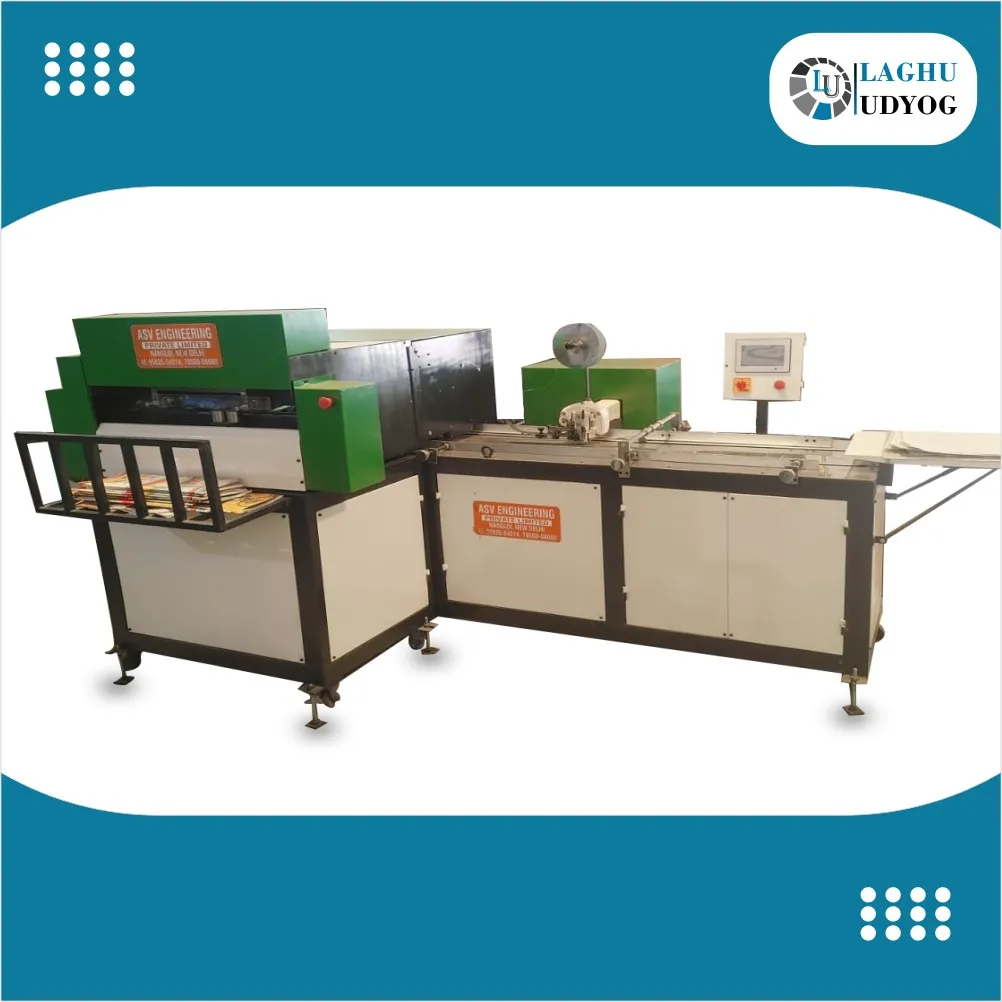
Starting a notebook making business is one of the most profitable ventures in the stationery industry. With the growing demand for educational materials and office supplies across India, notebook manufacturing offers an excellent opportunity for entrepreneurs looking to build a sustainable income source. In this comprehensive guide, we will break down the exact profit margins, cost structures, and return on investment calculations to help you make an informed business decision.
Notebook making machine price starts from Rs 45,000* making it a profitable low investment business idea for aspiring entrepreneurs across India.
Understanding the Notebook Manufacturing Market in India
India produces over 2 billion notebooks every year, and the demand continues to grow at a steady rate of 8-10% annually. The education sector alone accounts for nearly 70% of notebook consumption, while the corporate and office segment contributes the remaining 30%. This massive market size ensures consistent demand for notebook manufacturers, making it a relatively low-risk business compared to many other manufacturing ventures.
The stationery industry in India is valued at over Rs 25,000 crore and is expected to reach Rs 40,000 crore by 2027. Within this industry, notebooks and exercise books represent a significant share, with both urban and rural markets showing strong growth. Government initiatives to improve literacy rates and the expansion of private schools have further boosted demand for quality notebooks at affordable prices.
Cost Breakdown of Notebook Manufacturing
Understanding the cost structure is essential for calculating accurate profit margins. The total cost of manufacturing a notebook can be divided into several key components:
Raw Material Costs
The primary raw materials include paper, cover material, binding glue, and printing ink. For a standard single-line notebook with 100 pages, the raw material cost typically ranges from Rs 4 to Rs 7 per unit. Bulk purchasing of paper rolls and cover sheets can reduce this cost by 15-20%. The paper quality, measured in GSM (Grams per Square Meter), directly affects the cost - 55 GSM paper is the most economical while 70 GSM paper offers premium quality at a higher price point.
Machine and Equipment Costs
Investment in machinery is the most significant capital expenditure. A basic notebook making machine with cutting, stitching, and folding capabilities costs between Rs 1.5 lakh and Rs 3 lakh for semi-automatic models. Fully automatic machines with higher production capacity range from Rs 5 lakh to Rs 12 lakh. The machine life typically spans 10-15 years with proper maintenance, making the annual depreciation cost relatively low.
Labor and Operational Expenses
Labor costs depend on the level of automation and the number of workers required. For a small-scale operation, 2-3 workers can manage the entire production process with a semi-automatic machine. Monthly labor costs typically range from Rs 15,000 to Rs 30,000 depending on the location and skill level. Operational expenses including electricity, rent, and utilities add another Rs 10,000 to Rs 25,000 per month to the total cost structure.
Packaging and Transportation
Proper packaging is crucial for maintaining notebook quality during storage and transportation. Packaging materials including plastic wraps, cardboard boxes, and labels cost approximately Rs 1-2 per notebook. Transportation and distribution expenses vary based on the distance from the manufacturing facility to the target market, typically adding 5-8% to the total cost per unit.
Profit Margin Analysis Per Notebook
Let us analyze the profit margin for different types of notebooks manufactured using a standard notebook making machine:
Standard Single-Line Notebook (100 pages)
- Raw Material Cost: Rs 5.50
- Labor Cost per Unit: Rs 1.00
- Operational Cost per Unit: Rs 0.75
- Packaging Cost: Rs 1.00
- Total Manufacturing Cost: Rs 8.25
- Wholesale Selling Price: Rs 12-14
- Profit per Unit: Rs 3.75 to Rs 5.75
- Profit Margin: 31% to 41%
Premium Long Notebook (200 pages)
- Raw Material Cost: Rs 10.50
- Labor Cost per Unit: Rs 1.50
- Operational Cost per Unit: Rs 1.00
- Packaging Cost: Rs 1.50
- Total Manufacturing Cost: Rs 14.50
- Wholesale Selling Price: Rs 22-28
- Profit per Unit: Rs 7.50 to Rs 13.50
- Profit Margin: 34% to 48%
Graph Notebook (40 pages)
- Raw Material Cost: Rs 3.00
- Labor Cost per Unit: Rs 0.75
- Operational Cost per Unit: Rs 0.50
- Packaging Cost: Rs 0.75
- Total Manufacturing Cost: Rs 5.00
- Wholesale Selling Price: Rs 8-10
- Profit per Unit: Rs 3.00 to Rs 5.00
- Profit Margin: 37% to 50%
Return on Investment (ROI) Calculation
Calculating the return on investment helps you understand how quickly your initial capital investment will be recovered and when the business will become profitable. Here is a detailed ROI analysis for a typical small-scale notebook manufacturing setup:
Initial Investment Summary
- Notebook Making Machine (Semi-Automatic): Rs 1,25,000
- Paper Cutting Machine: Rs 35,000
- Printing Setup (if required): Rs 50,000
- Working Capital (3 months): Rs 1,50,000
- Furniture, Fixtures and Miscellaneous: Rs 40,000
- Total Initial Investment: Rs 5,25,000
Monthly Revenue and Profit Projection
Assuming a production capacity of 500 notebooks per day with 25 working days per month:
- Monthly Production: 12,500 notebooks
- Average Wholesale Price: Rs 13 per notebook
- Monthly Revenue: Rs 1,62,500
- Total Monthly Cost (Material + Labor + Operations): Rs 1,15,000
- Monthly Net Profit: Rs 47,500
Based on these calculations, the initial investment of Rs 5,25,000 will be recovered in approximately 11 months. After the breakeven point, the business will generate a consistent monthly profit that can be reinvested for expansion or taken as personal income. Many successful notebook manufacturers report achieving full ROI within 8-14 months of starting operations, depending on their market reach and production efficiency.
Strategies to Maximize Notebook Business Profit
While the baseline profit margins are attractive, there are several strategies you can implement to significantly increase your earnings:
Bulk Raw Material Procurement
Purchasing paper and cover materials in bulk directly from manufacturers or authorized distributors can reduce your raw material cost by 15-25%. Building long-term relationships with suppliers often leads to better pricing, credit terms, and priority delivery during peak demand seasons like the back-to-school period from March to June.
Product Diversification
Expanding your product range beyond basic notebooks to include custom-sized notebooks, branded notebooks for schools, spiral-bound notebooks, and specialized graph notebooks can command higher margins. Premium and customized products often yield profit margins of 45-55% compared to standard notebooks.
Direct School and Institution Sales
Establishing direct relationships with schools, colleges, and coaching centers provides a steady and predictable demand. Many manufacturers offer annual supply contracts to educational institutions at competitive wholesale prices while still maintaining healthy profit margins. This channel also reduces marketing costs and ensures consistent cash flow throughout the year.
Online Sales Channel
Leveraging e-commerce platforms like Amazon, Flipkart, and IndiaMart can significantly expand your customer base beyond your local market. Online sales often command retail prices that are 30-50% higher than wholesale prices, resulting in substantially higher profit margins per unit sold.
Seasonal Demand Optimization
The notebook industry experiences peak demand during two primary seasons - the back-to-school period (March-June) and the mid-year replenishment cycle (September-October). Planning production cycles and inventory buildup ahead of these peak seasons ensures maximum sales volume and profit during high-demand periods. Many manufacturers increase production by 40-60% during these months to capitalize on the surge in orders.
Quality Control and Waste Reduction
Implementing strict quality control measures reduces product returns and waste. Modern notebook making machines produce minimal paper waste, but optimizing your cutting patterns and using paper trimmings for smaller products like notepads can further reduce material costs by 5-10%. Training workers on efficient machine operation also minimizes production errors and material wastage.
Factors Affecting Notebook Business Profit Margins
Several external and internal factors can impact your profit margins. Understanding these factors allows you to make strategic decisions to protect and enhance profitability:
- Paper Price Fluctuations: Paper prices in India can fluctuate by 10-15% annually based on global pulp prices, import duties, and domestic supply conditions. Maintaining good supplier relationships and purchasing in advance during price dips can help manage this variable cost.
- Competition Level: The notebook manufacturing sector has varying levels of competition depending on the region. Tier 2 and tier 3 cities often have less competition compared to metro areas, allowing for better pricing and higher margins.
- Production Efficiency: Higher production volumes spread fixed costs over more units, reducing the per-unit cost and improving profit margins. Investing in more efficient machinery over time can significantly improve production efficiency.
- Brand Value: Building a recognizable brand allows you to command premium pricing. Even a modest brand premium of Rs 2-3 per notebook can increase profit margins by 15-20% on your total revenue.
- Distribution Network: Establishing an efficient distribution network reduces transportation costs and ensures timely delivery to customers. Partnering with existing distributors can help reach more markets without significant infrastructure investment.
Real-World Profit Examples from Indian Notebook Manufacturers
To provide practical context, here are some real-world examples of notebook manufacturing businesses in India and their profit performance. Small-scale manufacturers in cities like Indore, Jaipur, and Lucknow have reported annual revenues ranging from Rs 15 lakh to Rs 50 lakh with net profit margins between 28% and 38%. Medium-scale operations in states like Maharashtra, Gujarat, and Tamil Nadu with production capacities of 2000-5000 notebooks per day generate annual revenues of Rs 1-3 crore with net profit margins of 32-42%.
One notable example is a manufacturer in Rajkot who started with a single semi-automatic machine costing Rs 2.8 lakh and expanded to five machines within three years. His current monthly production exceeds 50,000 notebooks with a monthly net profit of approximately Rs 2.5-3 lakh. The key to his success was establishing direct supply contracts with over 50 schools in the Saurashtra region while simultaneously building an online presence on multiple e-commerce platforms.
Frequently Asked Questions
What is the profit margin in notebook making business?
The profit margin in notebook making business typically ranges from 25% to 40% depending on the scale of operation, raw material sourcing, and market reach. Small scale manufacturers can expect around 25-30% profit margin while larger operations with better procurement deals can achieve up to 40% or more on each batch of notebooks produced. The key to maximizing profit margins lies in bulk purchasing of raw materials, efficient production processes, and establishing strong distribution channels.
How much investment is needed to start notebook manufacturing?
Starting a notebook manufacturing business requires an initial investment of approximately Rs 2 lakh to Rs 10 lakh depending on the machine capacity and automation level. A basic manual or semi-automatic setup costs around Rs 2-4 lakh while a fully automatic notebook making machine can cost between Rs 6-10 lakh. Additional costs include raw material, rent, and working capital for the first few months of operation before the business starts generating consistent revenue.
What is the monthly income from notebook making business?
Monthly income from notebook making business varies based on production capacity and market demand. A small scale manufacturer producing 500-1000 notebooks per day can generate a monthly revenue of Rs 2-5 lakh with a net profit of Rs 50,000 to Rs 1.5 lakh. Larger operations producing 2000+ notebooks daily can earn significantly higher profits, with some manufacturers reporting monthly net incomes exceeding Rs 3-5 lakh after all expenses.
Product Price & Details
Notebook Making Machine
Price: ₹1,25,000* (Ex-works, GST extra)
SKU: BLOG-NB-001
Brand: Laghu Udyog India | Warranty: 1 Year
Related Products